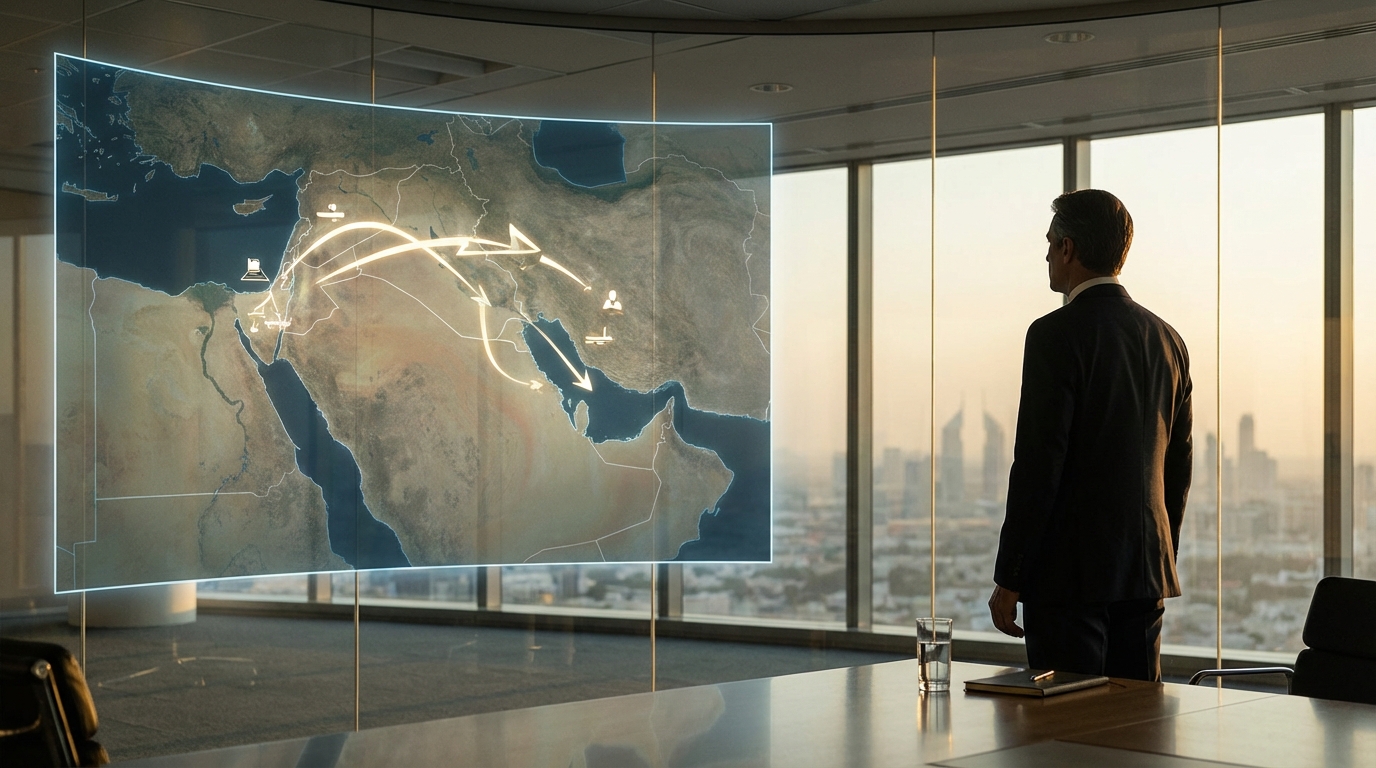
Israel has announced an expansion of its ground campaign into additional areas of southern Lebanon, intensifying fears among hundreds of thousands of displaced Lebanese regarding a potential prolonged occupation [3]. This military escalation coincides with heightened diplomatic tensions in the broader Middle East, as Iran's Foreign Minister has accused certain Gulf states of covertly encouraging US attacks on Iranians [1].
What Happened
- Israel's Defense Minister, Israel Katz, announced instructions for the Israel Defense Forces (IDF) to destroy “terror infrastructure” in southern Lebanese villages [3].
- The announcement of an expanded ground campaign in southern Lebanon has fueled concerns among displaced Lebanese about a prolonged Israeli presence [3].
- Katz drew parallels with Gaza, stating that displaced Lebanese would not be permitted to return until the safety of Israelis near the border was assured, implying a potential extended troop presence [3].
- Iran's Foreign Minister, Abbas Araghchi, claimed that some Gulf states hosting US forces might be covertly encouraging the “slaughter of Iranians” [1].
- Araghchi specifically demanded clarification on reports alleging that Saudi Crown Prince Mohammed bin Salman had regular private conversations with Donald Trump, urging the US President to “continue hitting the Iranians hard” [1].
- Donald Trump demanded that the UK, China, France, Japan, and other nations participate in a naval escort for oil tankers through the Strait of Hormuz [5].
- This demand followed a US attack on Iran, conducted with Israel, which the White House reportedly did not fully anticipate would lead to Iranian retaliation [5].
- Despite limited conventional military options, Iran was expected to respond by imposing costs on Western nations [5].
Why It Matters
The expansion of Israel's ground operations in southern Lebanon marks a significant escalation in the ongoing conflict, potentially widening the scope of military engagement and increasing humanitarian concerns. The Israeli Defense Minister's statements regarding the return of displaced Lebanese, drawing comparisons to Gaza, suggest a strategic intent that could lead to a prolonged military presence and de facto control over parts of southern Lebanon [3]. This development risks further destabilizing the border region, potentially drawing in additional regional actors and complicating any future de-escalation efforts.
Concurrently, Iran's accusations against Gulf states introduce another layer of complexity to regional dynamics. The claim that Gulf nations are covertly inciting US actions against Iran, particularly referencing alleged communications between Saudi leadership and the US President, highlights deep-seated mistrust and proxy rivalries [1]. Such accusations, whether substantiated or not, can exacerbate existing tensions, undermine regional stability, and complicate diplomatic efforts to foster a more secure environment. The explicit demand for clarification from Iran underscores the seriousness with which these reports are being viewed in Tehran [1].
The US demand for international participation in a naval escort in the Strait of Hormuz, following a joint US-Israeli attack on Iran, underscores critical challenges in managing maritime security in a vital global chokepoint [5]. The reported failure by the White House to fully anticipate Iran's likely retaliation suggests a reactive rather than proactive strategic posture. This perceived absence of a comprehensive strategy for Iranian responses could lead to unforeseen escalations or miscalculations in a highly volatile region, impacting global energy markets and international shipping [5]. The call for allied naval support indicates a recognition of the increased risk to maritime traffic following recent military actions [5].
Signals To Watch (Next 72 Hours)
- Statements from Lebanese government officials or Hezbollah regarding the expanded Israeli ground campaign [3].
- Any observable movements or deployments of Israeli forces in new areas of southern Lebanon [3].
- Responses from Saudi Arabia or other Gulf states to Iran's accusations of covert incitement [1].
- Further details or official reactions from the US administration regarding the alleged communications between Saudi Crown Prince Mohammed bin Salman and Donald Trump [1].
- Reactions from the UK, China, France, or Japan to Donald Trump's call for naval escorts in the Strait of Hormuz [5].
- Any reported incidents or increased security measures in the Strait of Hormuz or surrounding maritime areas [5].
- Statements from international bodies or humanitarian organizations concerning the displacement of Lebanese citizens and potential prolonged occupation [3].
The convergence of military escalation in Lebanon and diplomatic accusations concerning regional incitement signals a period of heightened instability in the Middle East.
Sources
- Gulf states may be covertly encouraging attacks by US, Iran’s foreign minister says — Guardian World · Mar 16, 2026
- Israel’s planned expansion of Lebanon ground campaign fuels fears of prolonged occupation — Guardian World · Mar 16, 2026
- Trump’s threats to Nato reveal glaring absence of any strategy on Iran — Guardian World · Mar 16, 2026