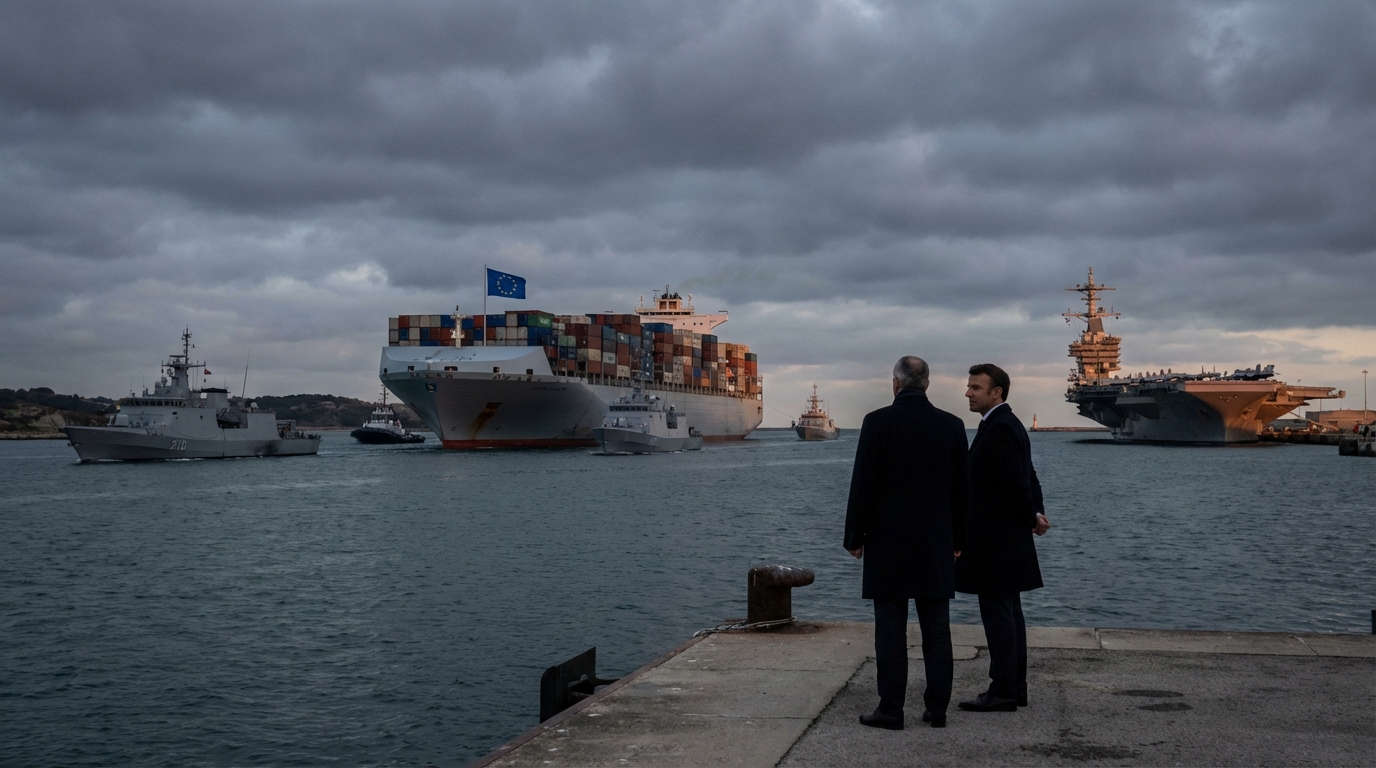
European nations have largely rejected calls from US President Donald Trump for military intervention in the Strait of Hormuz, signaling a significant divergence in international responses to the ongoing Middle East conflict [5, 11, 12]. This refusal comes as the wider conflict, marked by US-Israeli strikes on Iran, continues to severely disrupt global energy supplies, particularly impacting countries in South Asia [15, 16].
What Happened
- Several European countries, including Germany, have explicitly ruled out sending warships to the Strait of Hormuz, despite President Trump's assertions that NATO faces a "very bad future" if members do not assist in reopening the vital waterway [5, 11]. Germany's Merz stated that the Iran war is "not a matter for Nato," indicating a clear stance against military involvement [5].
- UK Prime Minister Keir Starmer has publicly distanced the United Kingdom from the broader Iran war, emphasizing that the UK will not be drawn into the conflict [12]. Starmer acknowledged the difficulty of this decision in the face of US pressure and also warned that the conflict should not become a "windfall for Putin" [12, 15].
- US President Donald Trump made contradictory remarks regarding the Strait of Hormuz, initially pleading with European and NATO allies for assistance, but later suggesting that US efforts to protect the strait were unnecessary due to the country's own oil supplies, questioning the need for a US presence there at all [4].
- The ongoing Middle East conflict and the effective closure of the Strait of Hormuz have led to severe disruptions in energy supplies, causing crippling shortages of fuel and LPG gas across South Asia [16]. Countries such as Sri Lanka, Bangladesh, India, and Pakistan are facing these critical shortages, which impact essential services from home cooking to cremations [16].
- In response to the energy crisis, Sri Lanka has implemented a shorter four-day working week as a measure to conserve its rapidly diminishing fuel and gas reserves [16]. This decision highlights the significant economic and social impact of the supply disruptions in the region [16].
- Japan's Prime Minister Sanae Takaichi has also indicated that her country has no immediate plans to deploy its maritime self-defense forces to assist in protecting tanker traffic in the Strait of Hormuz, stating that no decisions have been made regarding dispatching escort ships [5].
Why It Matters
The collective rejection by European nations and the United Kingdom of President Trump's call for military assistance in the Strait of Hormuz signifies a notable shift in transatlantic alliances and a potential redefinition of international security responsibilities [5, 11, 12]. This divergence from US foreign policy, particularly concerning a conflict initiated by US-Israeli strikes on Iran, challenges the traditional unity within NATO and other allied frameworks. President Trump's threat of a "very bad future" for NATO underscores the gravity of this diplomatic rift, suggesting long-term implications for collective defense and burden-sharing agreements [11]. The reluctance of key allies to engage militarily reflects a strategic preference for diplomatic solutions over direct intervention in the Middle East, potentially reshaping future international responses to regional crises.
The disruption to the Strait of Hormuz, a critical chokepoint for global oil shipments, has immediate and severe consequences for global energy security [16]. The resulting shortages of fuel and LPG gas in South Asian nations like Sri Lanka, Bangladesh, India, and Pakistan demonstrate the vulnerability of international supply chains to regional conflicts [16]. These energy shortfalls are not merely economic inconveniences but pose significant humanitarian challenges, affecting daily life and essential services. Sri Lanka's move to a four-day work week illustrates the drastic measures countries are compelled to take to manage dwindling resources, which can lead to reduced economic productivity and potential social unrest [16]. This situation highlights the interconnectedness of global energy markets and the far-reaching impact of geopolitical instability in key transit regions.
Furthermore, the broader context of the Middle East conflict and its economic fallout is creating complex geopolitical dynamics. UK Prime Minister Starmer's warning against the Iran war becoming a "windfall for Putin" suggests concerns about how regional instability could be exploited by other global powers, potentially diverting attention or resources from conflicts like the war in Ukraine [15]. This adds another layer of complexity to international relations, as nations balance their responses to immediate crises with broader strategic considerations. The ongoing US oil blockade contributing to Cuba's national electric grid collapse, leaving 10 million people without power and sparking violent protests, further illustrates how energy-related geopolitical tensions can destabilize countries and incite public unrest [8].
Signals To Watch (Next 72 Hours)
- Observe any further diplomatic statements or actions from European leaders, Japan, or the United States regarding military involvement or coordinated efforts to secure the Strait of Hormuz and de-escalate the broader Iran conflict [5, 11, 12].
- Monitor global energy markets for continued price fluctuations and supply chain adjustments, particularly in response to ongoing disruptions in the Strait of Hormuz and any new developments in the Middle East [16].
- Look for additional policy measures or emergency declarations from South Asian nations, including Bangladesh, India, and Pakistan, as they continue to address the severe fuel and gas shortages [16].
- Track progress and public statements regarding the urgent reboot of EU-UK negotiations, especially concerning critical areas such as tuition fees for EU citizens in Britain and food safety regulations, ahead of the planned July summit [9].
- Assess updates on the restoration of Cuba's national electric grid and any subsequent social or political ramifications following the widespread blackout and previous violent protests, amidst the ongoing US oil blockade [8].
- Follow the outcomes and any joint statements from Ukrainian President Volodymyr Zelenskyy's visit to the UK, particularly concerning the potential impact of the Iran war on the Ukraine conflict and the deadline for Roman Abramovich's Chelsea FC sale proceeds [15].
The international community remains focused on the evolving geopolitical landscape shaped by the Middle East conflict and its far-reaching implications.
Sources
- Supreme court will hear arguments in challenge to legal protections for Haitian and Syrian immigrants – US politics live — Guardian World · Mar 16, 2026
- Middle East crisis live: European countries resist Trump’s demand for help to clear the strait of Hormuz — Guardian World · Mar 16, 2026
- Cuba’s electrical grid collapses amid US oil blockade — Guardian World · Mar 16, 2026
- EU calls for urgent reboot in talks with UK to stop reset deal failing — Guardian World · Mar 16, 2026
- European countries reject Trump’s call for help to reopen strait of Hormuz — Guardian World · Mar 16, 2026
- Starmer distances UK from Iran war as EU leaders rule out sending warships — Guardian World · Mar 16, 2026
- Iran war cannot be ’windfall’ for Putin, says Starmer, as Zelenskyy arrives in UK — Guardian World · Mar 16, 2026
- Sri Lanka brings in four-day week to eke out stocks of oil and gas hit by Iran war — Guardian World · Mar 16, 2026