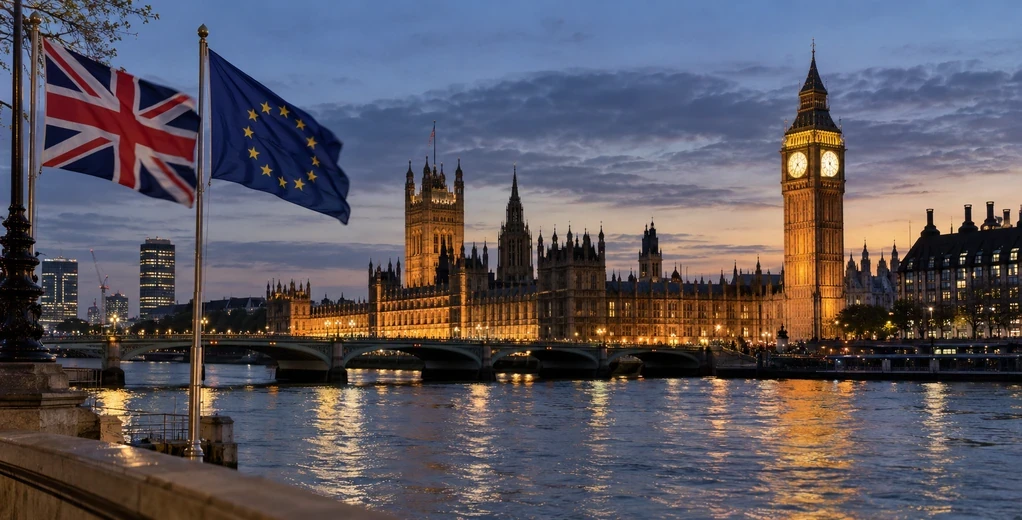
Prime Minister Andy Burnham's administration is actively engaging with the legacy of Brexit, signaling a strategic shift towards closer engagement with the European Union [4]. This move coincides with the government's efforts to manage significant domestic policy matters, such as a controversial early prisoner release scheme [5] and the official confirmation of Russian attempts to interfere in the 2016 Brexit referendum [6].
What Happened
- Prime Minister Andy Burnham has initiated a significant policy shift, advocating for closer links with the European Union a decade after the United Kingdom's departure [4]. This "Brexit reset" was highlighted during the autumn party conference season, where Burnham's administration presented a contrasting narrative to the Conservative party's historical accounts [4].
- The government has proceeded with the early release of approximately 2,000 offenders this month, a decision described as politically awkward for the new prime minister [5]. To mitigate political risk, Burnham's policy specifically excludes individuals convicted of manslaughter and certain other serious offenses [5].
- Ken McCallum, the head of MI5, publicly confirmed that Russia attempted to interfere in the Brexit referendum through various channels, including social media and television reports [6]. This confirmation aligns with recent statements made by Andy Burnham, though McCallum noted that the interference likely had little impact on the referendum's outcome [6].
- A coalition of major UK retailers and hospitality businesses, including prominent names like Tesco, Costa Coffee, the Co-op, Marks & Spencer, and Sainsbury’s, met with Chancellor John Healey [1]. They urged him to reduce the cost of employing young people by adjusting the national insurance contributions (NICs) threshold in his upcoming budget, citing the impact of recent NICs increases [1].
- Britain has formally appealed to Interpol, requesting the rejection of "politically motivated" requests from Argentina for the arrest of individuals involved in a substantial oil project off the Falkland Islands [3]. This diplomatic action comes amid heightened tensions over the sovereignty of the British overseas territory, reaching levels not observed since the 1982 conflict [3].
- Wes Streeting, appointed as Defence Secretary in Andy Burnham's cabinet, has been observed adapting to his new role, with commentary noting his shift in public persona [2]. His appointment was initially considered an unlikely fit by some, including Streeting himself, contrasting with the more traditional image of defence secretaries [2].
Why It Matters
The "Brexit reset" proposed by Prime Minister Burnham signifies a fundamental re-evaluation of the UK's post-EU relationship [4]. This strategic pivot could lead to a renegotiation of trade agreements, regulatory alignment, and broader diplomatic ties, potentially impacting economic growth, supply chains, and international standing. The editorial perspective suggests the political risks of this move are outweighed by potential rewards, indicating a significant shift in the national discourse surrounding Brexit [4].
The government's decision to implement early prisoner releases underscores the severe and ongoing crisis within the UK's prison and probation services [5]. With approximately 2,000 offenders being freed, the policy aims to alleviate overcrowding but simultaneously places immense pressure on community supervision programs. The success of this initiative, and the government's ability to demonstrate that community supervision works, will be crucial in mitigating public and political backlash, especially with a ballot on industrial action expected within these services [5].
The MI5 confirmation of Russian interference in the Brexit referendum, while downplaying its impact on the result, provides official validation of long-standing concerns about foreign influence in democratic processes [6]. This disclosure, aligning with Prime Minister Burnham's previous statements, could prompt renewed scrutiny of electoral security measures, digital disinformation campaigns, and the UK's counter-intelligence strategies. It also highlights the ongoing geopolitical competition and the importance of protecting national democratic integrity [6].
The direct appeal from major high street retailers and hospitality businesses to Chancellor John Healey regarding employment costs signals significant economic pressures on key sectors [1]. The call to reduce national insurance contributions for young employees reflects concerns about labor costs impacting business viability and youth employment opportunities. The government's response in the upcoming budget will be closely watched as an indicator of its strategy to support these vital industries and address youth unemployment [1].
The UK's diplomatic intervention with Interpol concerning Argentina's arrest requests for individuals involved in Falklands oil exploration highlights the enduring sensitivity and geopolitical importance of the Falkland Islands [3]. This move underscores the UK's commitment to defending its sovereignty and economic interests in the region. The escalation of tensions to involve an international policing body like Interpol indicates the seriousness of the dispute and its potential implications for international law and resource exploration rights [3].
Signals To Watch (Next 72 Hours)
- Any official announcements or detailed proposals from Prime Minister Burnham's government regarding the specific mechanisms and objectives of the "Brexit reset," including potential avenues for closer engagement with the European Union [4].
- Public and media reactions to the ongoing early prisoner releases, particularly any high-profile incidents or challenges faced by the probation service in managing the increased caseload [5].
- Further statements or policy responses from the UK government or international partners following the MI5 confirmation of Russian interference in the Brexit referendum [6].
- The Chancellor John Healey's upcoming budget announcement for any indications of changes to national insurance contributions or other measures aimed at supporting high street businesses and youth employment [1].
- Updates from Interpol regarding its decision on Argentina’s "red notice" requests for arrests related to the Falklands oil project, and any subsequent diplomatic reactions from the UK or Argentina [3].
- Public appearances or policy statements from Defence Secretary Wes Streeting that provide further insight into his strategic priorities or reforms within the Ministry of Defence [2].
- Developments concerning the expected ballot for industrial action within the prison and probation services, including any negotiations or proposed resolutions to address staff concerns [5].
- Economic data related to the retail and hospitality sectors, which could provide further context to the industry's calls for employment cost reductions [1].
The Burnham government's agenda reflects a dual focus on re-evaluating the UK's international posture and addressing pressing domestic issues, setting a complex policy landscape for the coming period.
Sources
- UK high street bosses urge chancellor to cut cost of employing young people — Guardian Politics · Oct 13, 2026
- Wes Streeting’s unintelligible jargon shows how well he’s bedded in at the MoD | John Crace — Guardian Politics · Oct 13, 2026
- UK asks Interpol to reject Argentina’s ‘politically motivated’ requests for Falklands oil arrests — Guardian Politics · Oct 13, 2026
- The Guardian view on Burnham’s Brexit reset: overdue, but proceed with care | Editorial — Guardian Politics · Oct 13, 2026
- The Guardian view on probation: overcrowded prisons need an outlet | Editorial — Guardian Politics · Oct 13, 2026
- Russia did try to interfere in Brexit referendum, head of MI5 confirms — Guardian Politics · Oct 13, 2026